

The Next Phase of Digitalisation in Malaysia: Where Smart Companies Are Positioning Themselves Now
Digital transformation in Malaysia is entering a high-stakes phase driven by AI, automation, and ecosystem collaboration, rapidly widening the gap between future-ready leaders and lagging organizations. Early positioning is now a critical strategic advantage, offering superior visibility and execution capability to those who prioritize workforce readiness and system design. As the market shifts toward connected, platform-driven transformation, the next 3–5 years will serve as the ultimate decider for which companies lead and which struggle to catch up.

Why Digital Transformation Can No Longer Be Solved Internally — And What Smart Companies Are Doing Instead
Digital transformation has become too complex for most organizations to handle in isolation, leading to slower progress and higher risk when attempted solely with internal capabilities. Future-ready companies are shifting toward an ecosystem-driven approach, leveraging platforms and networks to accelerate learning and improve execution quality. By exposing themselves to real-world implementations through collaboration, leading organizations reduce mistakes and stay ahead, proving that the future of transformation is no longer internally contained.
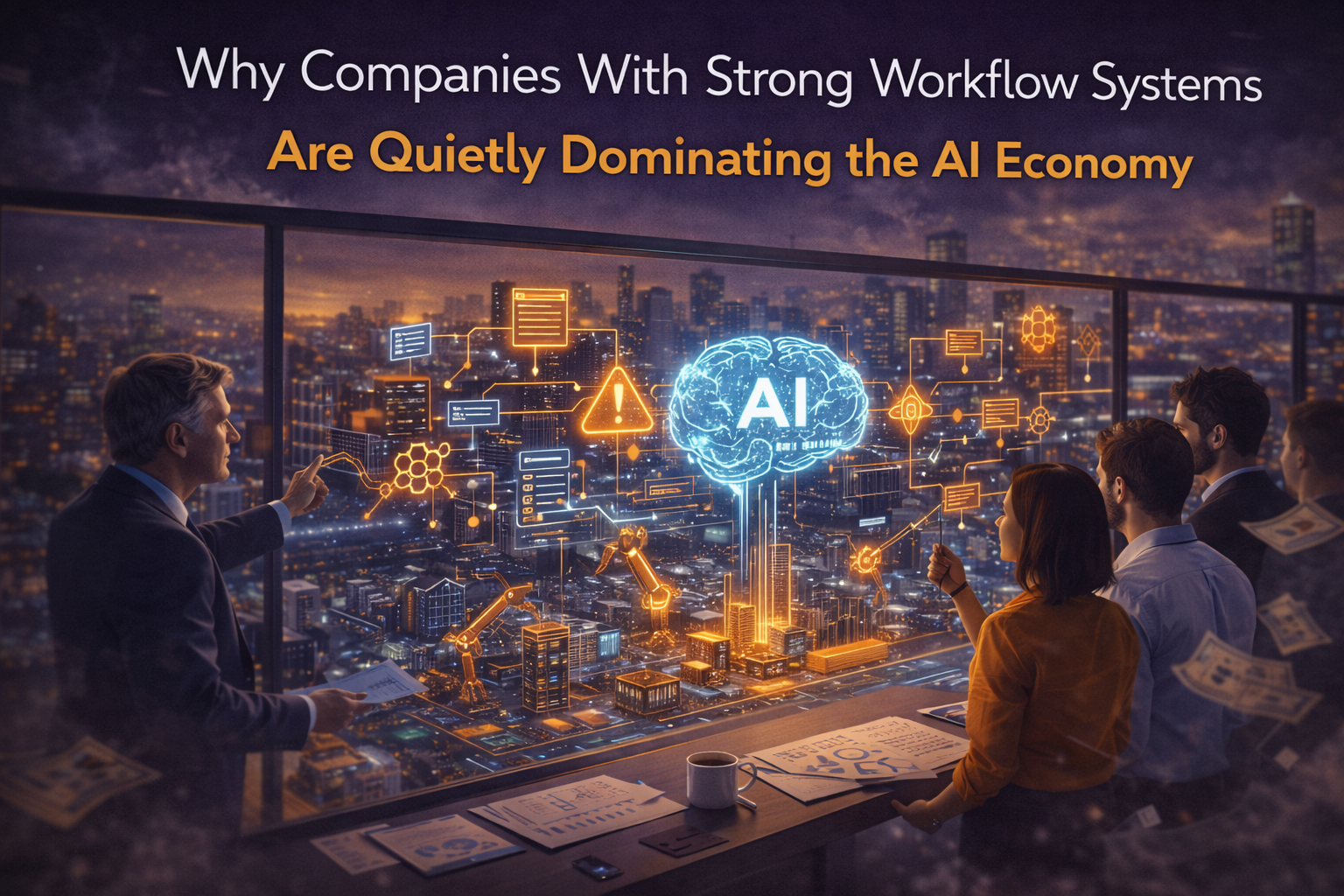
Why Companies With Strong Workflow Systems Are Quietly Dominating the AI Economy
The real competitive advantage in the AI era has shifted from technology ownership to workflow execution capability, as the value of digital tools is entirely dependent on the systems they inhabit. Organizations with robust, structured workflows make better decisions and scale more efficiently, whereas businesses that deploy tools without a strong process foundation inevitably experience slow growth and diminishing ROI. This disparity in execution is rapidly widening the gap between high-performing companies and those that are struggling to keep pace. Ultimately, becoming a future-ready organization requires a fundamental shift in investment strategy: prioritizing the design of integrated systems to ensure that AI and automation can actually deliver their promised impact.

Why Business Leaders Must Become Digital Architects — Or Stay Dependent Forever
True digital transformation success depends on leadership capability rather than external vendors, requiring decision-makers to deeply understand workflows and systems instead of just approving budgets. Companies that rely solely on vendors risk losing control over their execution and outcomes. By adopting a “Digital Architect” mindset, leaders can design how work operates and think in systems rather than tasks, ensuring faster decisions, better alignment, and stronger ROI.

Stop Buying Software — Start Designing Workflows: The Shift That Defines Digital Transformation Success
Digital transformation fails when companies prioritize software selection over workflow design, as tools like ERP and AI only deliver value when embedded into structured processes. The true driver of ROI isn’t the system itself, but how work flows through it; without a workflow-first approach, businesses face inefficiency and low adoption. Future-ready organizations succeed by perfecting their process architecture before investing in technology.

Why Your Software Isn’t the Problem — Your System Architecture Is
While most companies blame software when results fall short, the true culprit is often poor system architecture design. Tools like ERPs and AI platforms cannot deliver ROI without aligned workflows; instead, they create fragmented data and slow decision-making. The real shift in digital transformation isn’t about better tool selection—it’s about designing a system that dictates how information flows and how value is created, ensuring faster execution and long-term scalability.

The Hidden Cost of Forcing Your Business Into Software That Was Never Built for You
System misalignment often causes hidden operational losses as standard software forces workflows to adapt to the tool rather than the business. This creates inefficiencies—like manual workarounds and fragmented data—that prevent AI and automation from delivering a meaningful ROI. Because these structural flaws are rarely visible in reports, companies that ignore system misfit accumulate long-term strategic disadvantages that hinder their ability to compete.

Why Off-the-Shelf Systems Are Quietly Breaking Complex Businesses (And No One Is Admitting It)
Off-the-shelf ERP, CRM, and SaaS systems are often designed for standard workflows rather than complex business operations, leading many companies to unknowingly adapt their processes to fit rigid software constraints. This workflow distortion creates hidden inefficiencies, duplicated work, and slower execution, ultimately reducing ROI. Because AI and automation cannot deliver meaningful results when built on these misaligned foundations, businesses frequently find themselves optimizing within limitations instead of questioning the system itself. Consequently, custom system architecture is becoming a critical necessity for organizations with unique operational complexities that standard tools simply cannot accommodate.